
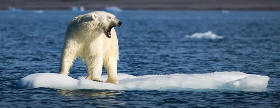
Climate Change is just fake news.
There is no such thing as Climate Change. Or is there?
Climate Change
It's been a feature of the Earth for millions of years, that it slowly evolves as it revolves. Remember the Ice-age? Maybe not personally, but our planet, like many others, changes over time. What causes change? Weather patterns, impact from outer space, such as solar flares, volcanoes, earth's orbit, diseases and viruses, unbalances in the natural environment, and humans of course, are possibly the biggest modern day threat to changes. Day to day activities cause the emission of greenhouse gases, such as methane and carbon. These gases prevent the heat emitted by the earth to escape, causing global warming.
People may argue that the climate has always changed, and yes, it has, but over millions of years. What we are witnessing in the 2020's is a rapid change, where human activity over the last 200 years, has had a potentially devastating effect on the air and atmosphere that is essential for all life to survive. Humans have influenced the climate and the earth's temperature primarily by burning fossil fuels, cutting down forests and trying to control nature, by drastically modifying environments, upsetting the natural balance whilst carrying out activities that have harmed animals, insects and plants and trees. Farming livestock in large numbers has impacted on this balance going unbalanced. Human activity adds enormous amounts of greenhouse gases to those naturally occurring in the atmosphere, increasing the greenhouse effect and global warming.
Home / Discussion / Climate Change
Climate Change - should we worry?
One of the biggest challenges is to control population growth. More humans equals more usage of resources - food, fresh water, security, habitat, quality of life....
not to mention the economic demands to assure that every person in the world has water to drink, food to eat, can live in their own home, in safety.
It's a fact - climate change is real, yet many people still pretend to deny it is there. There are things that everyone can do, and do it now, to do our bit and save the planet.
Even non-believers can do something positive about it - just in case they catch on in due course, when it may be too late to change back.
What can we do?
There are simple things everyone can do, but let's do it globally - we all share the same air. Fossil fuels like gas, oil and coal fired power or production methods must be wound down to zero over the next few years. So you should always try to avoid using fossil fuel fed products and activities. Simply drive less, as much as you can manage. An ideal transport solution, but with a cost, is to buy an electric powered vehicle. Ignore those who say they are dangerous and still rely on dirty electricity - electricity is getting cleaner due to coal-fired power stations closing and clean nuclear power stations are being developed. Electric cars can catch fire, but it's very rare, much less common that petrol cars igniting.
Drive slower - accelerate gently and brake less. Keep your revs down. Keep your car well maintained, with correct tyre pressures. Switch of your engine when you know you are going to be stationery for a minute or more. Remove any heavy objects you tend to carry around with you to reduce the weight and you'll save fuel. Put smaller amounts of fuel in to keep your cars weight down, so long as you don't have to make a long journey to get petrol or diesel.
In your home.
At home, keep the heating off or down. Find a balance to wear sensible warmer clothes if there's a chance you could save energy (and the cost of it). Keep your boilers serviced. Make sure you insulate as much as you can with loft insulation, wall insulation and draught proofing. Shop around and choose to have your gas and electricity supplied by a "GREEN" energy supplier. Think about how you dispose of rubbish, Recycle as much as you can, and do it sensibly. i.e avoid contamination of recycled items, by washing bottles and plastic and popping only recyclable items into your bin. Plant trees and shrubs, look after insects and bees, avoid using weedkillers and insecticides. Leave part of your garden "wild" to encourage helpful insects and plants.
Care for you home and your neigbourhood - protect your environment. Never, ever drop litter, especial near watercourses. It all ends up in the sea. Many plastics will remain in the sea for thousands of years, destroying the habitat of marine life, which work with nature to protect human life.
Aviod buying bottled water.
Discarded plastic bottles are so damaging to our planet. When shopping, try to select foods with less or no packaging and don't use carrier bags - use reusable "bags for life". Consider how far an item has travelled to reach the supermarket shelf, or fashion outlet etc. Buy wisely, supporting locally made items as much as you can.
Buy re-usable drink containers
Buy a Drink Bottle
Think about what you eat too.
Natural locally grown vegetarian foods are better for our planet than red meats, due to the methane produced, mainly by cows, which is bad for our air. Take holidays at home rather than jumping on a plane, whenever you can. Consider holidaying closer to home, to save fuel and spend what you have saved to support local businesses.
Talk to your friends and family about climate change, and your understanding of it. Try to educate the people who believe it's all fake news, and even if they are not convinced, to do something to help anyway.
Join local groups if you have concerns or want to know more about what you can do to help. Tree planting or restoring natural habitats is a great way to help nature recover from the damage our world has sustained from human ignorance. Nature-based solutions can contribute up to 37% of the carbon emission intake required to keep global warming down.
Here are some useful resources to help you be better informed about our changing world.
11 facts about Climate Change.
What is global warming, explained.
United Nations on Climate Change.
Global Citizen Climate Report.

Where next?